Replacement concrete foundation being prepared in a Barking residential garden

Foundation Replacement & Remedial Work Barking

We replace failed and poorly installed concrete bases where movement, sinking or cracking has started to affect the structure above. The job starts underneath the concrete, not with simply pouring another slab over the problem.

We work around existing slabs, old partial bases and restricted garden access, carrying out the excavation and preparation properly before the replacement concrete goes in.
✔ Foundation Replacement Specialists
✔ Ground Preparation Focused
✔ Tight Access Installation Work

Barking Foundation Replacements & Remedial Work

When an existing concrete base starts moving, cracking or sinking, the visible damage is often only part of the problem. We regularly attend jobs where an old base has been poured over unsuitable ground, compacted poorly or installed without properly dealing with what was already underneath.

In Barking gardens, we can also come across old paving, slabs, broken concrete and partial foundations from previous structures. Simply leaving those materials underneath a new base can create weak spots that eventually show themselves again.

Our approach is straightforward: establish what has failed, remove what needs removing, prepare the ground properly and install a replacement base suited to the structure going back on it.

When Foundation Replacement Is The Better Option

Not every cracked base needs replacing. We look at what has actually happened before deciding how the remedial work should be handled. If the existing concrete has failed because the ground beneath it is unstable, repairing the surface alone normally does not address the cause.

Cracked or broken concrete

Cracks that continue to open, sections that have broken away or a base that has visibly moved can indicate that the concrete is no longer providing a suitable platform for the structure. We assess the condition of the existing base and the ground beneath it before recommending replacement work.

Sinking sections

A base that has dropped in one area will often leave the structure sitting out of level. We remove the failed material where required and rebuild the formation rather than trying to make the finished concrete compensate for a poor foundation underneath.

Old bases installed over unsuitable ground

This is one of the common problems we come across. An old patio, loose fill, disturbed soil or previous garden construction may have been left beneath the original concrete without enough proper compaction.

Partial foundations and old slabs

Some gardens have been altered several times over the years. We can encounter an existing slab in one section, bare soil in another and remnants of an older structure somewhere else. A replacement foundation needs to deal with those differences rather than simply bridging over them.

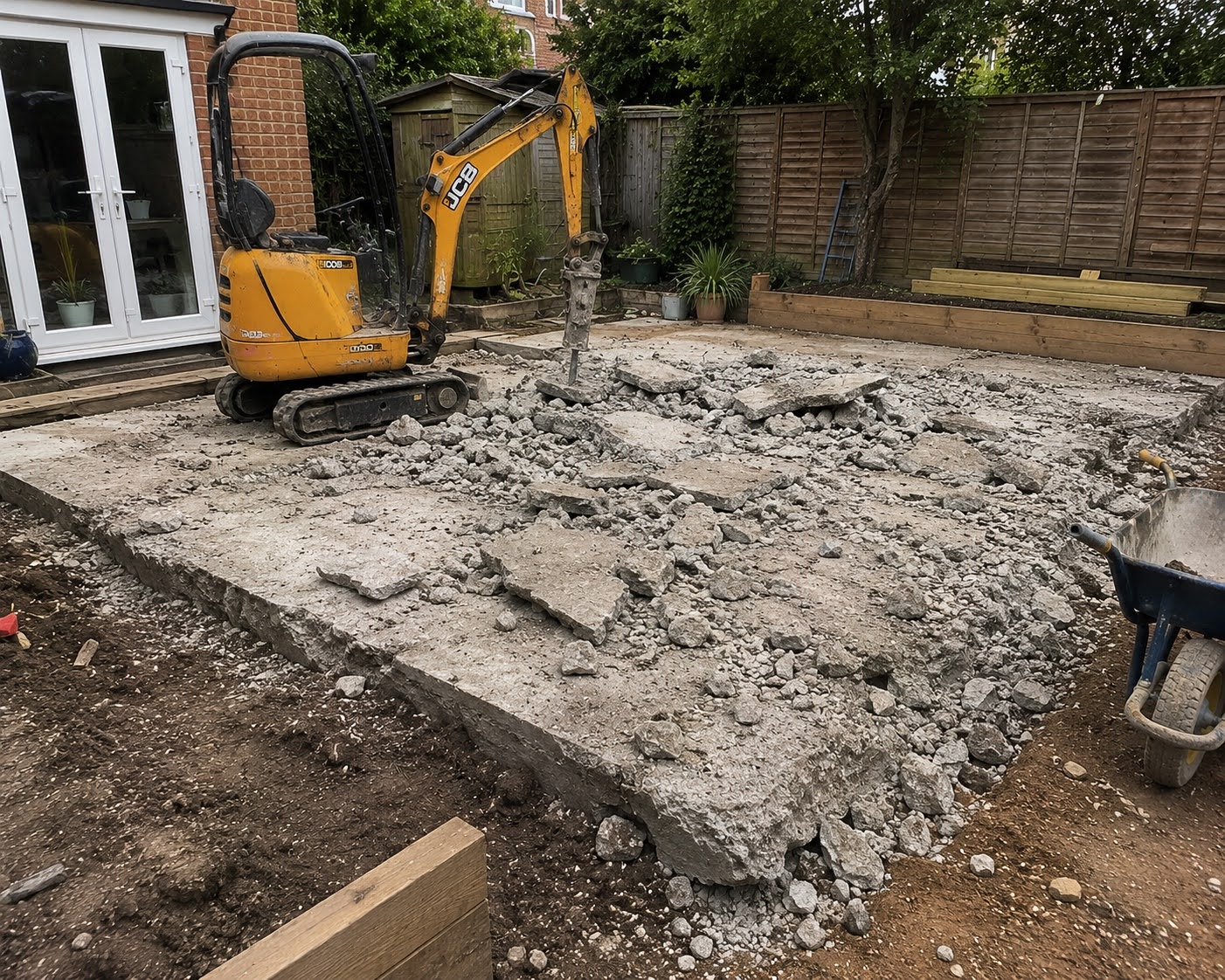
Old concrete base being removed during foundation remedial work in Barking

We Deal With The Failed Base, Not Just The Crack

A common mistake with remedial concrete work is concentrating on the visible crack and ignoring the reason the concrete moved in the first place. If the ground beneath has settled or the original preparation was poor, a cosmetic repair does not change the underlying conditions.

Where replacement is required, we strip back the failed area and expose the ground that will actually support the new base. Existing slabs and broken concrete are removed where they interfere with the new foundation formation.

Why the preparation matters

Once the new concrete is down, getting back underneath it is difficult, disruptive and expensive. That is why we spend the time on excavation, levelling and compaction before arranging the concrete supply.

Structures We Commonly Replace Bases For

Replacement work is often needed when an existing garden structure has been sitting on a base that was never properly prepared. We assess the intended structure and build the replacement foundation around the actual requirements rather than using a one-size-fits-all slab.

Garden offices and cabins

Larger garden offices and cabins can make movement particularly obvious. Doors stop closing correctly, floors become uneven and gaps can appear where the structure has moved away from the original level.

Sheds and workshops

Smaller structures still need a stable platform. A shed base that has sunk at one corner can twist the structure and leave water sitting against areas that should remain properly supported.

Summerhouses and garden buildings

Where an older summerhouse or garden building is being retained but its original concrete base has failed, replacing the foundation can provide a much better platform for the structure to be reinstated.

Existing external structures

We can also deal with other residential structures where the existing concrete foundation has deteriorated or was not installed correctly in the first place. The site assessment establishes what needs to be removed and what the replacement needs to support.

Old Slabs And Partial Bases Underneath Barking Gardens

This is something we pay particular attention to on replacement jobs. You can lift the visible concrete and find several different layers underneath it — old patio slabs, hardcore, loose soil and sections of previous concrete work.

Those materials do not automatically make a suitable foundation formation. If parts of the old construction are unstable, they can move independently beneath the replacement base.

We establish a suitable formation before continuing with the new base. Depending on what we find, that can mean breaking out old concrete, removing unsuitable material, excavating further and installing a properly compacted sub-base.

Concrete foundation remedial work through narrow garden access in Barking

Foundation Replacement With Narrow Side Access

Limited access is common on Barking residential jobs. Narrow side paths can restrict where excavation equipment, aggregates and concrete can be moved, so we work out the access and material movement before starting the strip-out.

On some jobs, smaller excavation equipment is the practical option. On others, material has to be moved through the property or concrete delivery needs to be organised around the available access.

Concrete supply is planned around the site

Once the formation is ready, we arrange the concrete supply to suit the pour. Depending on the size and access conditions, this can involve a ready-mix delivery from a batching plant and planned placement rather than having concrete arrive before the site is actually ready for it.

The aim is to keep the pour organised and avoid leaving prepared ground exposed unnecessarily.

What We Check Before Replacing A Failed Foundation

We do not price remedial foundation work properly from a photograph alone when the condition underneath is unknown. A site visit lets us see what has failed and, just as importantly, what caused it.

That gives us a much clearer picture of the actual job rather than guessing at the remedial work from the visible damage.

Why Most Base Problems Come From Poor Preparation

In our experience, the concrete itself is rarely the first thing to blame. More often, the problem starts underneath it.

If loose ground is left underneath, if old material is bridged over without being made stable, or if the sub-base is not properly compacted, the finished concrete can move when the ground moves.

Once a structure is installed on top, even a small amount of movement can become noticeable. Doors bind, floors go out of level, frames twist and cracks appear through the concrete.

That is why we do not cut corners on preparation. The parts of the job that nobody sees once the concrete has been poured are some of the most important parts of the installation.

What Can Happen When A Moving Base Is Left Alone?

Foundation movement does not always stop at a crack in the concrete. When the structure above is fixed to a base that is moving, the movement can work its way into the building itself.

Uneven support

If one part of the base sinks more than another, the structure can lose its original level. That can become obvious around doors, floors, walls and framing.

Continued cracking

Cracks can continue to develop if the underlying movement remains. Filling the crack does not stop the ground from moving underneath the concrete.

Drainage problems

A base that has changed level can also lose its intended fall. Water can start collecting against the structure instead of draining away as planned.

More expensive remedial work later

Once the structure is fully installed, fixing the foundation becomes more disruptive. Getting the base right while the structure can still be removed or reinstated is usually the cleaner approach.

Our Foundation Replacement Process In Barking

We keep remedial foundation work organised because there is no point removing an old base only to rush the preparation underneath the replacement.

1

Site Assessment

We inspect the failed base, surrounding ground, existing slabs, structure and access before deciding how the replacement should be carried out.

2

Break Out & Excavation

Failed concrete and unsuitable existing material are removed where necessary, exposing the ground that will support the new foundation.

3

Ground Preparation

We establish the correct levels, deal with unsuitable ground and install and compact the required sub-base.

4

Drainage & Reinforcement

Falls, drainage requirements and reinforcement are addressed where the replacement foundation requires them.

5

Concrete Pour

Concrete delivery is coordinated with the prepared site, then the replacement base is placed, levelled and finished correctly.

6

Final Checks

We check the finished levels, edges, falls and overall condition before the area is handed back ready for the structure.

Practical Considerations Before Foundation Replacement

The existing structure

If the structure is being reused, we need to understand how it will be removed and reinstated. That affects the finished dimensions, levels and timing of the replacement foundation.

Existing concrete and paving

Old slabs may look solid from above but can be sitting on unsuitable ground. We assess what can genuinely form part of the new construction rather than assuming everything already there is usable.

Finished falls

The replacement base needs to finish at the correct level and, where appropriate, have a suitable fall for water to drain away. We establish this before the concrete goes down.

Access and removal

Breaking out an old base creates spoil as well as requiring new materials. With narrow side access, the route for getting waste out and the replacement materials in needs to be considered from the beginning.

Concrete delivery

We arrange concrete supply around the actual pour rather than treating delivery as an afterthought. On larger replacement bases, ready-mix from a batching plant can make the installation much more efficient when the site and access allow it.

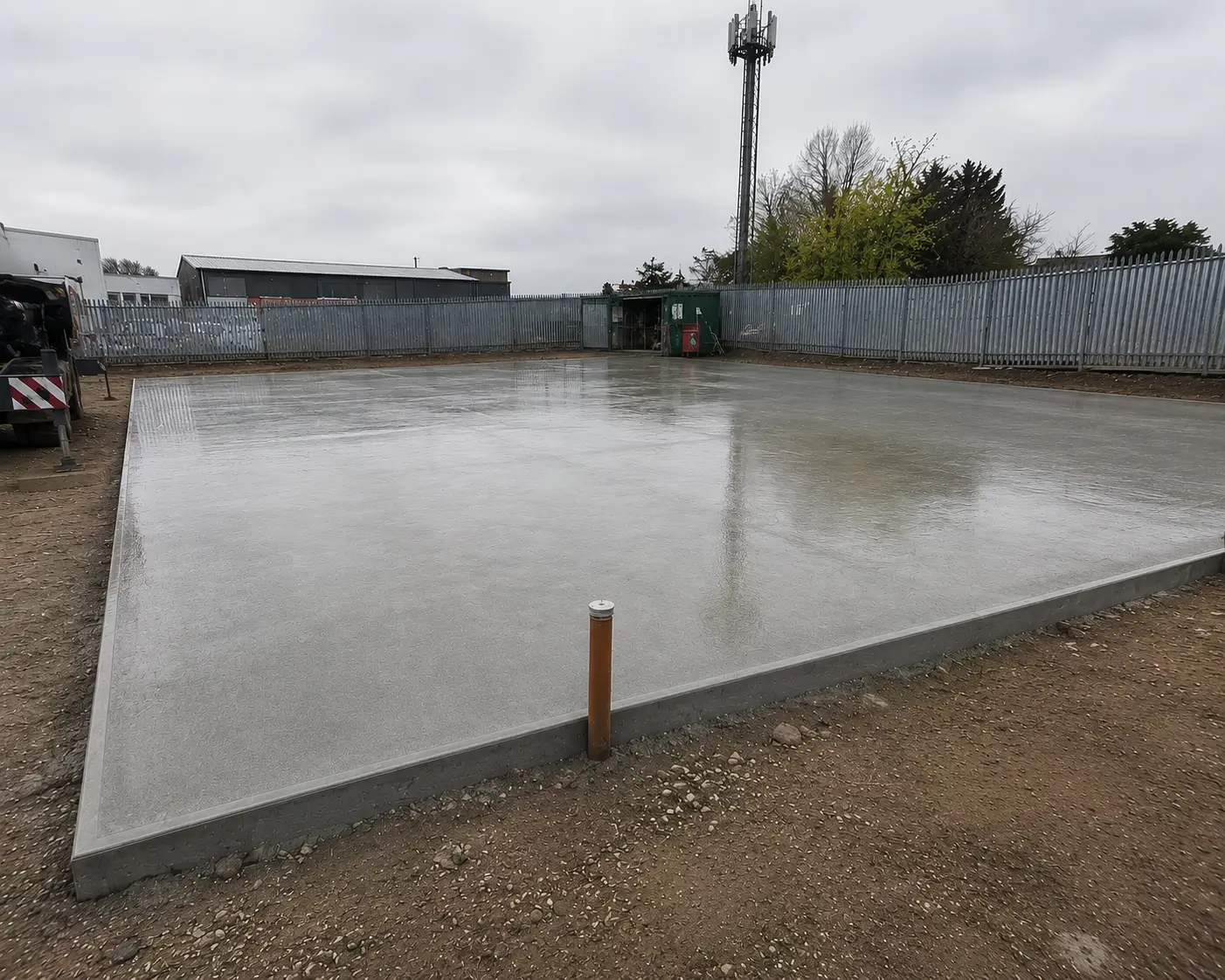
Freshly completed replacement concrete foundation in a Barking garden

The Aim Is To Stop The Same Problem Coming Back

A remedial foundation job should not simply make the concrete look better. The purpose is to give the structure a properly prepared and stable platform so the same movement does not continue underneath it.

That means taking the time to deal with the ground, levels, old materials, drainage and reinforcement where required before the replacement concrete is installed.

Once the new foundation is complete, the structure has a sounder platform to sit on and the work underneath it is no longer something you need to keep worrying about.

Foundation Replacement FAQs

Can you replace a concrete base that has already sunk?

Yes. We first establish why it has sunk and whether the surrounding ground or existing materials are contributing to the movement. Where replacement is appropriate, the failed material is removed and the formation is rebuilt before new concrete is installed.

Can you pour a new base over the old concrete?

Sometimes an existing base can be retained, but we do not automatically build over it. If the old concrete is cracked, moving or sitting over unsuitable ground, covering it can leave the original problem underneath the new work.

What if there are old patio slabs underneath?

We assess them as part of the site preparation. If they are unsuitable or likely to move, they are removed rather than being treated as a reliable foundation without checking.

Can you work through a narrow side passage?

Yes. Restricted access is something we plan for on residential jobs. The available route affects excavation equipment, material handling, waste removal and how the concrete is delivered.

Does the replacement base need reinforcement?

That depends on the size, use, ground conditions and intended structure. Where reinforcement is appropriate, we incorporate it into the foundation construction rather than treating it as an unnecessary add-on.

How do I know whether my base needs replacing?

A site inspection is the best way to establish that. We look at the movement, cracking, levels and condition of the existing concrete as well as the ground and structure above it.

Book A Foundation Replacement Site Visit In Barking

If an existing concrete base has started sinking, cracking or moving, the sensible first step is to establish what is happening underneath it.

We can inspect the existing base, access, ground conditions and structure, then explain what needs to be removed and how we would approach the replacement.

No guessing from the surface and no covering up a problem that needs dealing with underneath.

Visit Homepage
☎ For Free Estimate WhatsApp Us